
Material And Order Requirement
Confirm steel type, thickness, surface request and food-contact working environment against the order requirement.
Inspection
Quality control is built around the drawing, old sample or confirmed specification: material, hardness, thickness, hole position, bevel angle, edge condition and packing protection.
For custom and replacement blades, the important question is not only whether a blade looks sharp. It must fit the machine, cut consistently and survive cleaning and repeated production.
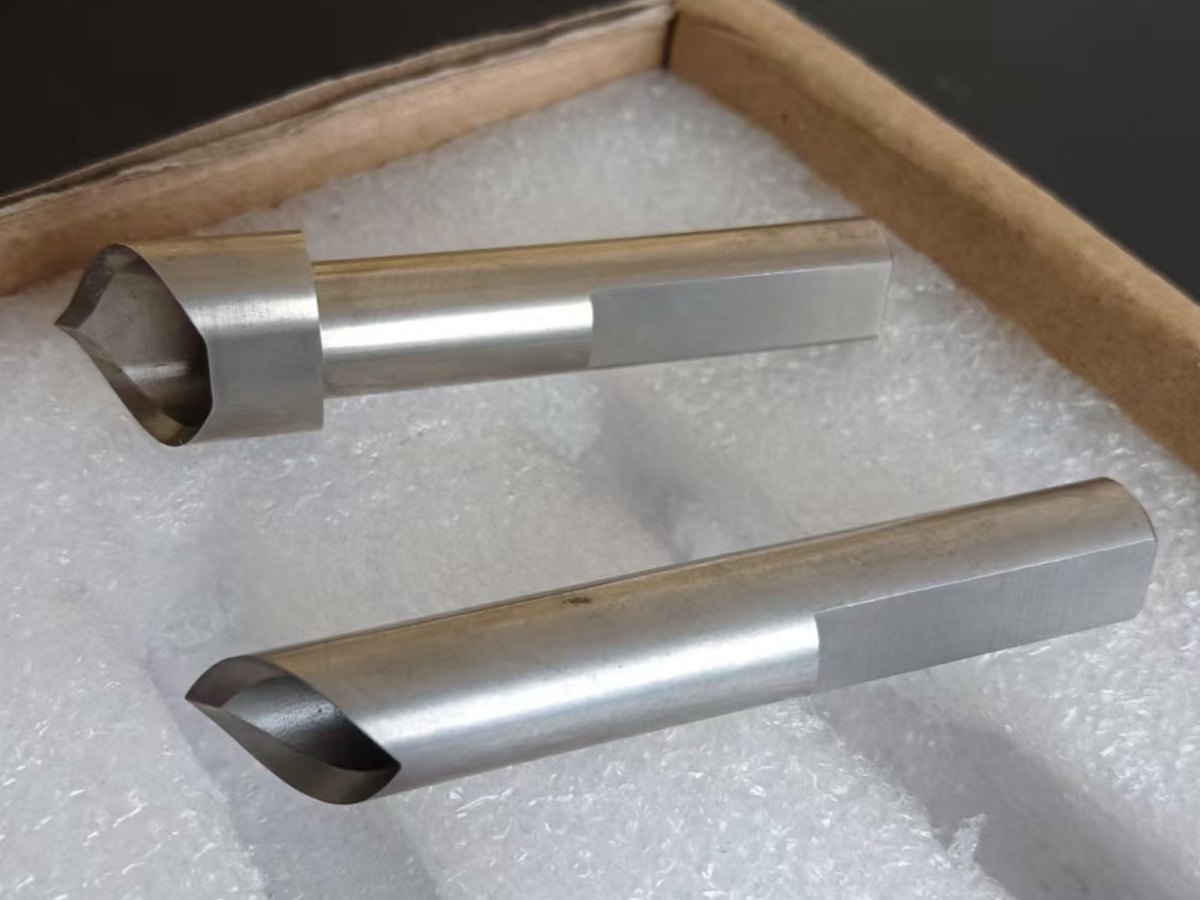
The final inspection standard should be agreed from the drawing, sample or equipment model before production starts.
Confirm steel type, thickness, surface request and food-contact working environment against the order requirement.

Check hardness after heat treatment according to the target range confirmed for the blade type and cutting load.
Check outer profile, mounting holes, slots, bore size and key mounting dimensions against drawing or old blade sample.

Review blade thickness, flatness, straightness and deformation risk before edge finishing and packing.

Inspect bevel direction, edge angle, burr condition, tooth pitch or perforation pitch according to blade function.
Check polishing, scratches, rust spots, cleaning marks and apply anti-rust packing suitable for transport.
Inspection
The report images are shown as examples of quality verification capability. For batch production, inspection items and report documents should follow the confirmed order requirement.
Original report screenshots are retained for credibility; translated captions explain the purpose for international buyers.
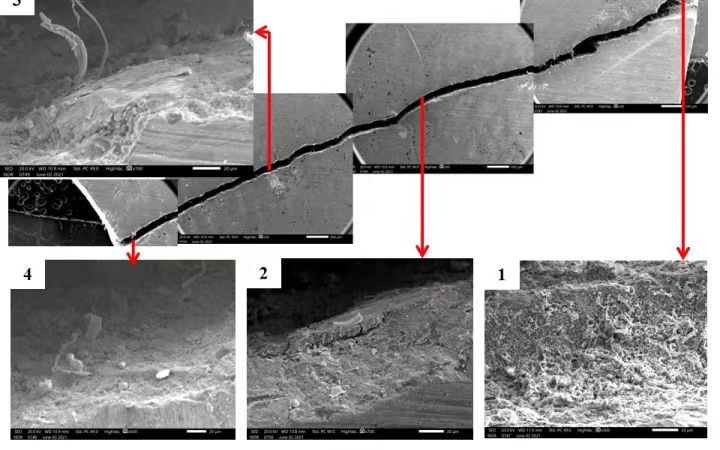
Scanning electron microscope images help review edge morphology, fracture trace, wear condition and abnormal surface features.
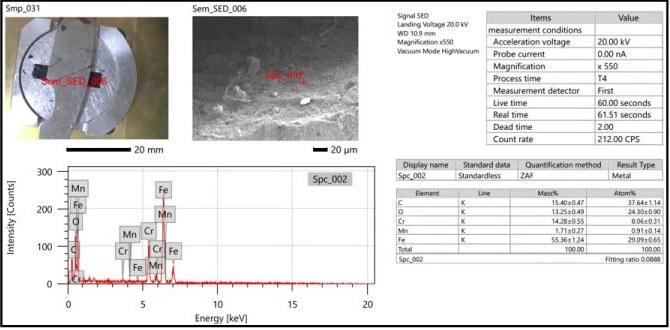
Element spectrum analysis checks whether abnormal elements appear around the inspected area and supports material review.
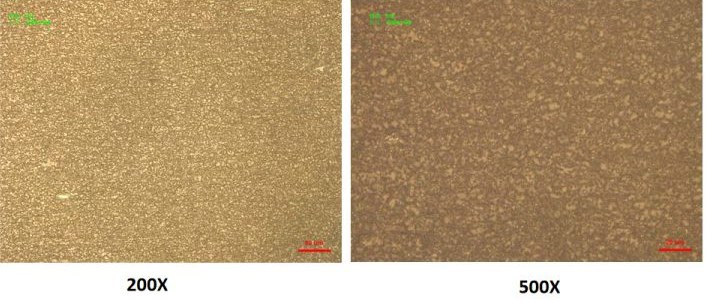
Microstructure observation helps review heat treatment condition, matrix uniformity and obvious carbide segregation.
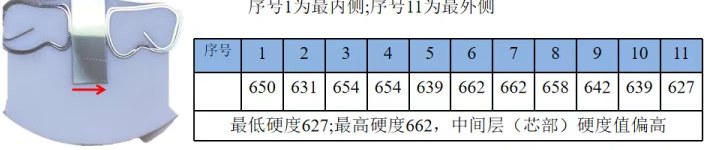
Hardness readings across different positions help judge heat treatment consistency and whether the target range is suitable.
Quality control for food machine blades focuses on measurable risks: material, hardness, hole position, thickness, bevel angle, edge consistency, surface finish and anti-rust packing.
The report examples above illustrate inspection methods. Match any document supplied for an order to the actual sample or production batch and the agreed requirements.
Check the sample or batch reference, date, method and measured locations. A result from another sample does not establish the material or performance of your blade.
Agree the dimensions, hardness or other inspection requirements before production. Ask which documents will be provided for your order and how any nonconforming result will be addressed.